Efficiency of Internal Auditors and Its Reflection on the Quality of Performance Evaluation
DOI:
https://doi.org/10.71207/ijas.v22i87.5896Keywords:
regulatory controls, Reducing risksAbstract
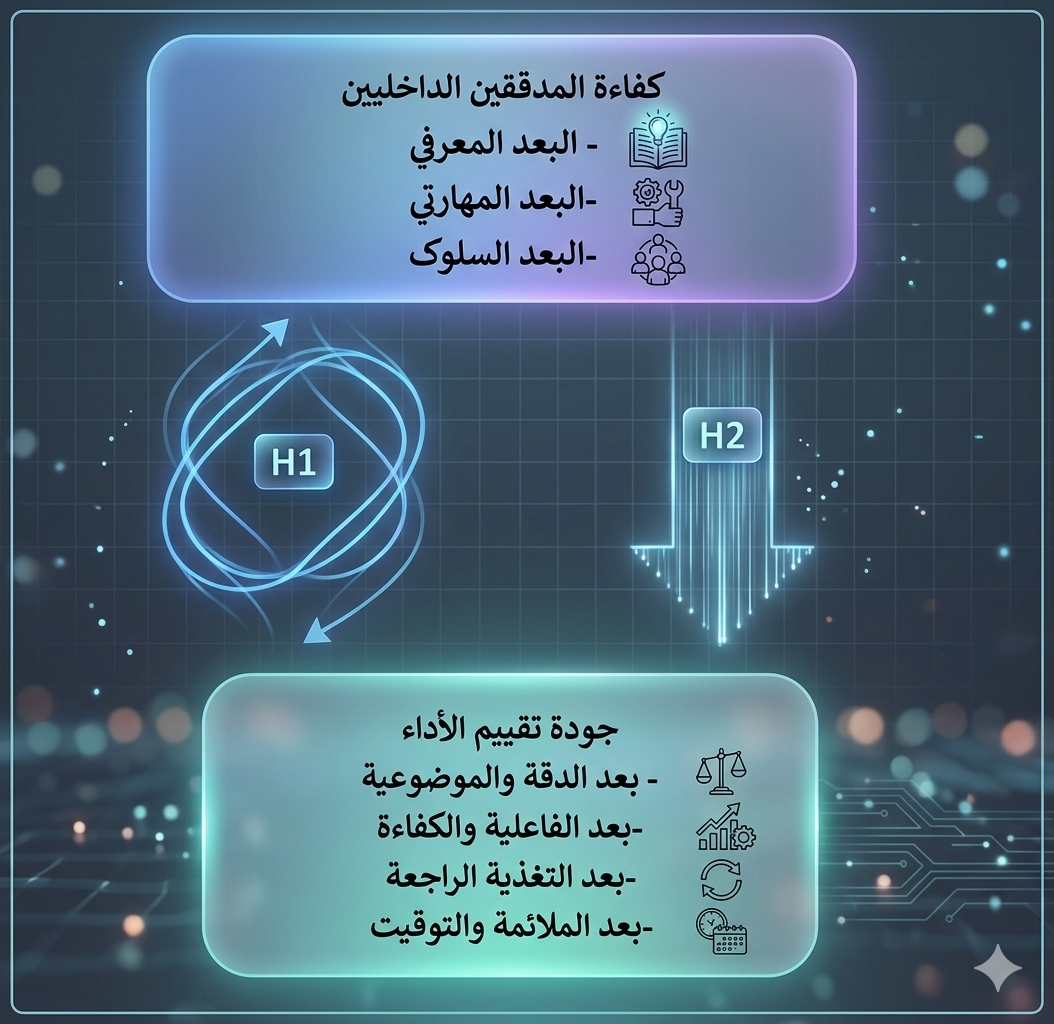
This research aims to study the importance of internal auditors’ efficiency and its impact on enhancing the quality of performance evaluation within the economic unit. The research population consists of the University of Karbala, and the study sample includes employees of the Internal Control and Accounting Departments, as they represent the targeted group of the research. The study adopted the deductive approach and relied on previous literature to design a questionnaire consisting of two main sections. The first section focused on internal auditors’ efficiency, which included three dimensions: cognitive, skills, and behavioral. The second section addressed the quality of performance evaluation through four dimensions: accuracy and objectivity, effectiveness and efficiency, feedback, and relevance and timeliness. A total of (170) questionnaires were collected and analyzed using the Statistical Package for the Social Sciences (SPSS). The findings indicate that high levels of internal auditors’ efficiency, particularly their ability to analyze and interpret financial and accounting information, have a positive effect on improving the quality of performance evaluation. Based on these findings, the study recommends enhancing auditors’ critical thinking and accounting knowledge, developing their cognitive skills in line with modern accounting trends, and improving their ability to perceive and manage risks through specialized training programs.
Downloads
Downloads
Published
How to Cite
Issue
Section
License
Copyright (c) 2026 Fatima Ali Mahdi , Mushtaq Talib Abdulameer Al-Shimmery

This work is licensed under a Creative Commons Attribution-NonCommercial-NoDerivatives 4.0 International License.
Authors retain the copyright of their papers without restrictions.