
تأثير القيادة الريادية في الأداء الابتكاري دراسة ميدانية في عدد من الكليات الاهلية في محافظات الفرات الاوســط / العراق
DOI:
https://doi.org/10.71207/ijas.v14i55.2532الكلمات المفتاحية:
القيادة الريادية، الأداء الابتكاريالملخص
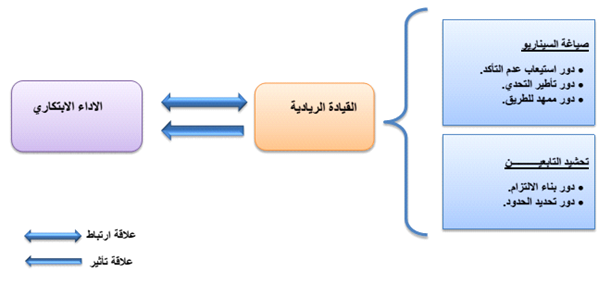
يهدف البحث الحالي الى معرفة تأثير القيادة الريادية المتمثلة بـأبعادها(صياغة السيناريو ، وتحشيد التابعين( التي تتمتع بها القيادة الادارية في الكليات الاهلية على الاداء الابتكاري ، ولأجل تحقيق هدف البحث تم اختيار الكليات الاهلية في محافظات الفرات الاوسط ) النجف الاشرف ، كربلاء المقدسة ، الديوانية ، بابل. ( واعتمد البحث الاستبانة كأداة لجمع البيانات الضرورية لانجاز هذا البحث وتحقيق الاهداف التي يسعى اليها. إذ تم توزيع (265) استمارة استبانة على التدريسين في الكليات الاهلية ، وتم الحصول على (128) استمارة صالحة للتحليل. واستخدم البحث عدد من الاساليب الاحصائيىة على سبيل المثال الوسط الحسابي ، والانحراف المعياري ، ومعامل الارتباط الخطي البسيط سبيرمان ، ومعادلة الانحدار الخطي البسيط والمتعدد . وأظهرت النتائج وجود علاقة ارتباط ذات دلالة معنوية موجبة بين القيادة الريادية والاداء الابتكاري. ووجود علاقة تأثير ايجابية ذات دلالة معنوية ايجابية بين القيادة الريادية والاداء الابتكاري.
التنزيلات
المراجع
المصادر والمراجع
• Al-Araimi, M.F., Saleh, (2012). “The Relationship between the Full Range of Leadership Styles and Employees’ Creative Performance in Civil Service Organizations: A Field Study of Omani Civil Service Managers, thesis- degree of Doctor in Development Policy and Management, University of Manchester.
• AL-Khalifah, Bashayer (2014). “Entrepreneurial leadership in Kuwaiti Privates Firms” thesis - Doctor of business management, University Of Sterling
• Amabile, T. M., Schatzel, E. A., Moneta, G. B., and Kramer, S. J. (2004)." Leader behaviours and the work environment for creativity: Perceived leader support". The Leadership Quarterly, 15(1): 5-32
• Bagheri, A., & Pihie, Z. A. L. (2009). “An Exploratory Study of Entrepreneurial Leadership Development of University Students “European Journal of Social Sciences – Volume 11, Number 1.
• Bagheri, A., & Pihie, Z. A. L. (2013). " Entrepreneurial leadership competencies among Malaysian university student entrepreneurial leaders “Asia Pacific Jou-rnal of Education • December 2013
• Chen, M. H. (2007). “ Entrepreneurial leadership and new ventures: Creativity in entrepreneurial teams”. Creativity and Innovation Management, 16 (3), 239-249. doi: 10.1111/j.1467-8691.2007.00439.x
• Cohen, A. R. (2004). " Building a company of leaders. Leader to Leader ", 2004(34),20.
• Covin, J. G. and Slevin, D. P. (1988) ‘The influence of organization structure on the utility of an entrepreneurial top management style’, Journal of Management Studies, 25 (3), 217-259.
• Crute, C. D. (2010).” Understanding how community college leaders identify with and relate to entrepreneurial leadership” (Doctoral dissertation). ProQuest Dissertations and Theses (UMI number: 3420126)
• Currie,G,Humphreys,M., Ucbasaran,D. & McManus, S. (2008).“ Entrepreneurial Leadership in the English Public Sector: Paradox or Possibility?” Public Administration, 86, 4, 987–1008.
• Drucker, P. F. (1986). " Innovation and Entrepreneurship: Practice and Princi-ples ". London: Pan Books Ltd.
• Egan, T. M. (2005). "Factors influencing individual creativity in the workplace: An examination of quantitative empirical research". Advances in Developing Human Resources, 7(2): 160- 181.
• Fernald, Jr., L. W., Solomon, G. T. and Tarabishy, A. (2005) ‘A new paradigm: Entrepreneurial leadership’, Southern Business Review, 30(2), 1-10.
• Greenberg,D.,McKone-Sweet and Wilson,H.J.(2011). "The New Entrepreneurial Leader: Developing Leaders Who Shape Social and Economic Opportunity". San Francisco, Cal. : Barrett Koehler.
• Gupta, V., MacMillan, I. C., & Surie, G. (2004).” Entrepreneurial leadership: Developing and measuring a cross-cultural construct”, Journal of Business Venturing, 19(2),241–260.
• He, Ling., (2014). “The Perceived personal characteristics of entrepreneurial leader” Thesis - Master , School of Business Faculty of Business Law Edith Cowan University.
• Hunt, J. G., & Dodge, G. E. (2000). “Leadership déjà vu all over again”. The Leadership Quarterly, 11(4), 435-458.
• Hunt-Qxendia, C., (2010). Entrepreneurial leade ship: A quantitative study of the Motivation and sustainable business strategies of American Indian entrepreneurs in North Carolina. Doctoral dissertation. Michigan: ProQuest LLC
• Ireland, R. D., & Hitt, M. A. (1999). “ Achieving and maintaining strategic comp-etitiveness in the 21st century: The role of strategic leadership “. Academy of Management Executive,13,43-57
• Ireland, R. D., Covin, J. G. and Kuratko, D. F. (2007). “ A Model of Corporate Entrepreneurship Strategy’, Best Papers: Special Conference on Strategic Entr-epreneurship”, Max Planck Institute, Germany.
• Jaskyte, K., and Kisieliene, A. 2006. Determinants of employee creativity: A survey of lithuanian nonprofit organizations. Voluntas: International Journal of Voluntary and Nonprofit Organizations, 17(2): 128-136.
• Jung, D. I. 2001." Transformational and transactional leadership and their effects on creativity in groups". Creativity Research Journal, 13(2): 185-195.
• Kim, J. 2001. “ A study of relationships among work motivation, problem-solving style, leadership style, and team climate on creative behaviour in the south Korean workplace “. (Unpublished doctoral dissertation). University of Missouri, Columbia.
• Koivuniemi, Reetta., (2016). " What it takes to become an entrepreneurial leader?" Thesis- Master - Aalto University.
• Kuratko, D. F. and Hodgetts, R. M. (2007). "Entrepreneurship: Theory, Process, Practice", OH: Thomson/ South Western Publishing
• Kuzmenko, T., (2009). " The Effects Of Transformational And Transactional Leadership On Individual Creative Performance: Role Of Follower's Motivation, Identity And Self-Esteem " Thesis, Degree Doctor ofPhilosophy, McMaster University.
• Luthans F., & Doh, P. Jonathan, (2012). "International Management: Culture, Strategy, and Behavior" , 8 Edi, Published by McGraw-Hill.
• McGrath, R. G., & MacMillan, I. C. (2000). "The Entrepreneurial Mindset: Strategies for Continuously Creating Opportunity in an Age of Uncertainty": Boston, Mass. ; [Great Britain] : Harvard Business School Press.
• McKone-Sweet, Greenberg, D. and Wilson, H. J. (2011) “A Giving Voice To Values Approach to Educating Entrepreneurial Leaders”, Journal of Business Ethics Education, 8 ,337-342
• Mumford, M. D., Scott, G. M., Gaddis, B., and Strange, J. M. 2002. Leading creative people: Orchestrating expertise and relationships. The Leadership Quarterly, 13(6): 705-750.
• Oke, A., Munshi, N., and Walumbwa, F. O. 2009. “The Influence of leadership on innovation processes and activities. Organizational Dynamics”, 38(1): 64-72.
• Oldham, G. R., and Cummings, A. 1996."Employee creativity: Personal and contextual factors at work". The Academy of Management Journal,39(3): 607-634.
• Pallant, J. (2011). "SPSS Survival Manual". 4th ed., open university press, McGraw-Hill education.
• Parks, S. (2006). "How to Be an Entrepreneur". Hounslow, Essex: Pearson Education Limited.
• Perren, L. (2002). “Comparing entrepreneurship and leadership”: A textual analysis The Council for Excellence in Management and Leadership Retrieved from 6http://www.managementandleadershipcouncil.org/downloads/r6.pdf
• Pieterse, A. N., Knippenberg, D., Schippers, M., and Stam, D. 2010. “Transformational and transactional leadership and innovative behaviour: The moderating role of psychological empowerment”. Journal of Organizational Behaviour, 31(4): 609-623
• Politis, J. D. 2004. “Transformational and transactional leadership predictors of the ‘stimulant’ determinants to creativity in Organizational work environments. The Electronic Journal of Knowledge Management, 2(2): 23-34.
• Prabhu, G.N. (1999). "Social entrepreneurial leadership". Career Developm-ent International, 4, 140-146.
• Redmond, M. R., Mumford, M. D., and Teach, R. (1993). "Putting creativity to work: Effects of leader behaviour on subordinate creativity". Organizational Behaviour and Human Decision Processes, 55(1): 120-151
• Roomi, M. A., & Harrison, P. (2011). “Entrepreneurial leadership: What is it and how should it be taught?” International Review of Entrepreneurship, 9(3).
• Saunders, M. N., Lewis, P. and Thornhill, A. (2009). "Research methods for business students". 5th ed., Pearson Education Limited.
• Scott, S. G., and Bruce, R. A. 1994. “Determinants of innovative behaviour: A path model of individual innovation in the workplace”. The Academy of Management Journal, 37(3):580-607.
• Shamir, B., House, R. J., and Arthur, M. B. (1993) “The motivational effects of charismatic leadership: A self-concept based theory”, Organisational Science, 4, 577–594.
• Sosik, J. J., Kahai, S. S., and Avolio, B. J. (1998). “Transformational leadership and dimensions of creativity: Motivating idea generation in computer-mediated groups”. Creativity Research Journal, 11(2): 111-121.
• Surie, G. and Ashley, A. (2008). “Integrating pragmatism and ethics in entrepreneurial leadership for sustainable value creation”. Journal of Business Ethics, 81, 235-246.
• Timmons, J. A. (2007), “New Venture Creation: Entrepreneurship for the 21st Century”, 7th ed., McGraw-Hill, Boston, MA.
• Uhl-Bien, Mary, Schermerhorn, R., John & Osborn ,Richard N., (2014). "Organizational Behavior" 13th Edition , John Wiley & Sons, Inc.
• Vecchio, R. P. (2003). “ Entrepreneurship and leadership: Common trends and common threads”. Human Resource Management Review, 13, 303-327.
• Zaccaro, S. J., Kemp, C., & Bader, P. (2004). “Leader traits and attributes”. In J. Antonakis.
• Zhang, X, Gloor, P & Grippa, F (2013), 'Measuring creative performance of teams through dynamic semantic social network analysis', International Journal Organi-sational Design and Engineering, vol. 4, no. 2, pp. 165-84.
• Zhou, J., & George, J.M. (2001)." Whenjob dissatisfaction leads to creativity organizational creativity". Academy of Management Review, 18 (2), pp.293-321
التنزيلات
منشور
كيفية الاقتباس
إصدار
القسم
الرخصة
الحقوق الفكرية (c) 2024 احسان دهش جلاب ، حميدة غجير جريمخ

هذا العمل مرخص بموجب Creative Commons Attribution-NonCommercial-NoDerivatives 4.0 International License.
يحتفظ المؤلفون بحقوق الطبع والنشر لأوراقهم دون قيود.