
استخدام نماذج التعلم العميق في التنبؤ بأسعار العملات المشفرة
DOI:
https://doi.org/10.71207/ijas.v22i87.5594الكلمات المفتاحية:
التعلم العميق , العملات المشفرة , البيتكوين , العملات العادية , نموذج الذاكرة طويلة المدى ,نموذج وحدة البوابات المتكررةالملخص
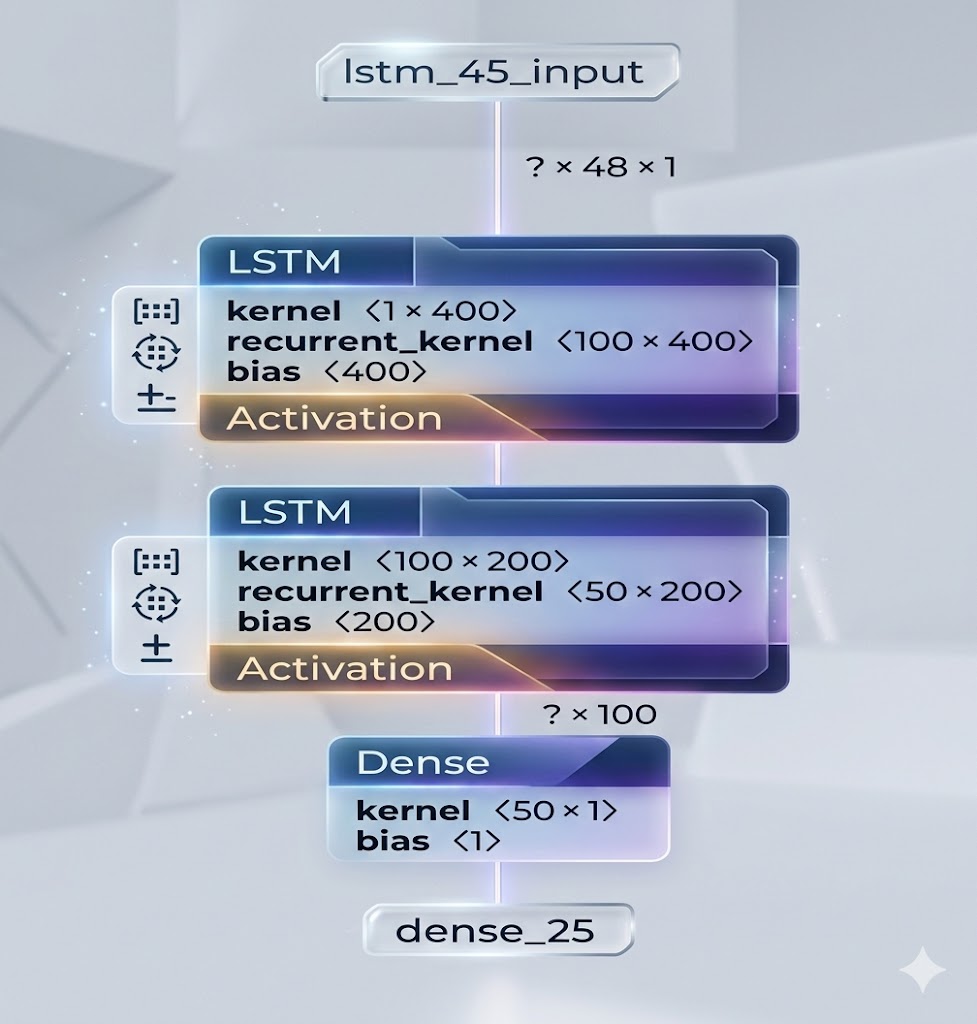
تهدف الدراسة الى تقييم فعالية نماذج التعلم العميق، وتحديداً نموذج الذاكرة الطويلة والقصيرة المدى (LSTM) ونموذج وحدة البوابات المتكررة (GRU)، في التنبؤ بأسعار العملة المشفرة المتمثلة في البيتكوين وذلك بالاعتماد على سلسلة زمنية أسبوعية لمدة عشر سنوات، من 4 يناير 2015 حتى 29 ديسمبر 2024، بواقع 522مشاهدة لأسعاراغلاق البيتكوين الاسبوعية،تم بناء هيكلية نموذج (LSTM) ونموذج (GRU)، بواسطة لغة البرمجة R وباستعمال مجموعة من المكتبات التابعة لهذه اللغة أهمها مكتبة Keras المعروفة في مجال التعلم الآلي، اذ تم اختيار نماذج LSTM وGRU في هذه الدراسة استنادًا إلى قدرتهما العالية على نمذجة العلاقات الزمنية المعقدة والتعامل مع مشكلتي التلاشي وتضخم التدرج. اذ انتهجت الدراسة أسلوبا تحليليا للمقارنة بين نموذجين و المفاضلة بينهما لترشيح النموذج الأمثل وفقا لمقاييس الأداء المتمثلة بكل من متوسط الخطأ المطلق (MAE) ومتوسط مربع الخطأ ( MSE) والجذر التربيعي لمتوسط مربع الخطأ (RMSE) وتوصلت الدراسة إلى عدة نتائج ، أهمها تفوق نموذج LSTM على نموذج GRU في التنبؤ بأسعار البيتكوين وفى ضوء ذلك قدمت الدراسة عدة توصيات أهمها الاعتماد على نموذج شبكة الذاكرة الطويلة LSTM ، في التنبؤ في الدراسات المستقبلية
التنزيلات
المراجع
1. روابة محمد. (2024). استخدام الشبكة الذاكرة طويلة قصيرة المدى للتنبؤ بأسعار عملة البيتكوين. مجلة المنهل الاقتصادي, 7, 113–122. https://www.asjp.cerist.dz/en/PresentationRevue/479
1. Ahamad, S., Nair, M., & Varghese, B. (2013). A Survey on Crypto Currencies, In 4th International Conference on Advances in Computer Science ,. AETACS, 42–48.
2. Alsalmi, N., Ullah, S., & Rafique, M. (2023). Accounting for digital currencies. Research in International Business and Finance, 64, 101897.
3. Ammer, M. A., & Aldhyani, T. H. H. (2022). Deep Learning Algorithm to Predict Cryptocurrency Fluctuation Prices: Increasing Investment Awareness. Electronics, 11(15), 2349.
4. Awoke, T., Rout, M., Mohanty, L., & Satapathy, S. C. (2021). Bitcoin Price Prediction and Analysis Using Deep Learning Models (pp. 631–640).
5. Barrutia, I., Urquizo Maggia, J. A., & Acevedo, S. I. (2019). Criptomonedas y blockchain en el turismo como estrategia para reducir la pobreza. Retos, 9(18), 287–302.
6. Bos, A. R. (2018). ryptocurrencies and Regulation, a Master Thesis on the best practices for regulating cryptocurrencies within the EU. University of Leiden.
7. Chaum, D. (1983). Blind Signatures for Untraceable Payments. In Advances in Cryptology (pp. 199–203). Springer US.
8. Chohan, U. (2017). Cryptocurrencies: A Brief Thematic Review. SSRN Electronic Journal. https://doi.org/10.2139/ssrn.3024330
9. Faez Hasan, M. (2023). Beyond Bitcoin: A Review Study on the Diverse Future of Cryptocurrency. IRE Journals, 7(3), 64–69.
10. Faria, D. L. (2020). Revisiting the Impact of Cryptocurrency in Our Society, Master’s thesis. ISCTE-Instituto Universitario de Lisboa.
11. Härdle, W. K., Harvey, C. R., & Reule, R. C. G. (2020). Understanding Cryptocurrencies*. Journal of Financial Econometrics, 18(2), 181–208.
12. He, Y., Huang, P., Hong, W., Luo, Q., Li, L., & Tsui, K.-L. (2024). In-Depth Insights into the Application of Recurrent Neural Networks (RNNs) in Traffic Prediction: A Comprehensive Review. Algorithms, 17(9), 398.
13. Hillman, H. D. (2020). Money Laundering through Cryptocurrencies: Analysing the Responses of the United States and Australia and Providing Recommendations for the UK to Address the Money Laundering Risks Posed by Cryptocurrencies ,. University of the West of England.
14. Hochreiter, S., & Schmidhuber, J. (1997). Long Short-Term Memory. Neural Computation, 9(8), 1735–1780.
15. Janiesch, C., Zschech, P., & Heinrich, K. (2021). Machine learning and deep learning. Electronic Markets, 31(3), 685–695.
16. Kingma, D. P. (2015). Adam: A method for stochastic optimization. As a Conference Paper at ICLR International Conference on Learning Representations (ICLR). ArXiv Preprint ArXiv:1412.6980, 1412(6).
17. Leong, L. A. (2023). Forecasting SOXX with Long Short-Term Memory (LSTM) Neural Networks Based on Varying Sampling Periods. Dissertation, Selinus University.
18. Malladi, R. K. (2023). Pro forma modeling of cryptocurrency returns, volatilities, linkages and portfolio characteristics. China Accounting and Finance Review, 25(2), 145–183.
19. Mendes, J. F. B. (2019). FORECASTING BITCOIN PRICES ARIMA vs LSTM [Master’s thesis]. ISCTE-Instituto Universitario de Lisboa.
20. Mijwil, M. M. , A. K. , S. S. , A.-M. A. H. , A. S. , G. M. , . . . & A. S. H. (2022). Has the Future Started? The Current Growth of Artificial Intelligence, Machine Learning, and Deep Learning. Iraqi Journal for Computer Science and Mathematics3(1), 13., 115–123.
21. Nosouhian, S., Nosouhian, F., & Kazemi Khoshouei, A. (2021). A Review of Recurrent Neural Network Architecture for Sequence Learning: Comparison between LSTM and GRU.
22. Peters, G. W., Panayi, E., & Chapelle, A. (2015). Trends in Crypto-Currencies and Blockchain Technologies: A Monetary Theory and Regulation Perspective. SSRN Electronic Journal, 3(3), 1–25.
23. Rahardja, U. (2023). The Economic Impact of Cryptocurrencies in Indonesia. ADI Journal on Recent Innovation (AJRI), 4(2), 194–200.
24. Revuelta, V. (2018). Design and implementation of a software system for the composition of a database and automated trading system on different cryptocurrency trading markets [Master’s thesis]. Universitat Politècnica de Catalunya.
25. Rice, M. (2019). Cryptocurrency: History, advantages, disadvantages, and the future [Master’s Thesis]. Liberty University.
26. Sanz Bas, D. (2020). Hayek and the cryptocurrency revolution. Iberian Journal of the History of Economic Thought, 7(1), 15–28. https://doi.org/10.5209/ijhe.69403
27. Sarker, I. H. (2021). Machine Learning: Algorithms, Real-World Applications and Research Directions. SN Computer Science, 2(3), 160.
28. Shahinzadeh, H., Mahmoudi, A., Asilian, A., Sadrarhami, H., Hemmati, M., & Saberi, Y. (2024). Deep Learning: A Overview of Theory and Architectures. 2024 20th CSI International Symposium on Artificial Intelligence and Signal Processing (AISP), 1–11.
29. Sharma, N., Sharma, R., & Jindal, N. (2021). Machine Learning and Deep Learning Applications-A Vision. Global Transitions Proceedings, 2(1), 24–28.
30. Tanwar, S., Patel, N. P., Patel, S. N., Patel, J. R., Sharma, G., & Davidson, I. E. (2021). Deep Learning-Based Cryptocurrency Price Prediction Scheme With Inter-Dependent Relations. IEEE Access, 9, 138633–138646.
31. Wang, P., Fan, E., & Wang, P. (2021). Comparative analysis of image classification algorithms based on traditional machine learning and deep learning. Pattern Recognition Letters, 141, 61–67.
32. Wolfson, S. N. (2015). Bitcoin: The Early Market. Journal of Business & Economics Research (JBER), 13(4), 201.
33. Wu, J. Zhang, X. Huang, F. , Zhou, H. , & Chandra, R. (2024). Review of deep learning models for crypto price prediction: implementation and evaluation. 1–29.
34. Xiong, R. (2020). Battery Management Algorithm for Electric Vehicles. Springer Singapore.
35. Zhang, L., Wang, S., & Liu, B. (2018). Deep learning for sentiment analysis: A survey. WIREs Data Mining and Knowledge Discovery, 8(4).
36. Zou, W., Lo, D., Kochhar, P. S., Le, X.-B. D., Xia, X., Feng, Y., Chen, Z., & Xu, B. (2021). Smart Contract Development: Challenges and Opportunities. IEEE Transactions on Software Engineering, 47(10), 2084–2106.
التنزيلات
منشور
كيفية الاقتباس
إصدار
القسم
الرخصة
الحقوق الفكرية (c) 2026 Zahraa Kadhim Majeed , Haider Abbas Abdullah, Ameer Ali Khaleel

هذا العمل مرخص بموجب Creative Commons Attribution-NonCommercial-NoDerivatives 4.0 International License.
يحتفظ المؤلفون بحقوق الطبع والنشر لأوراقهم دون قيود.